
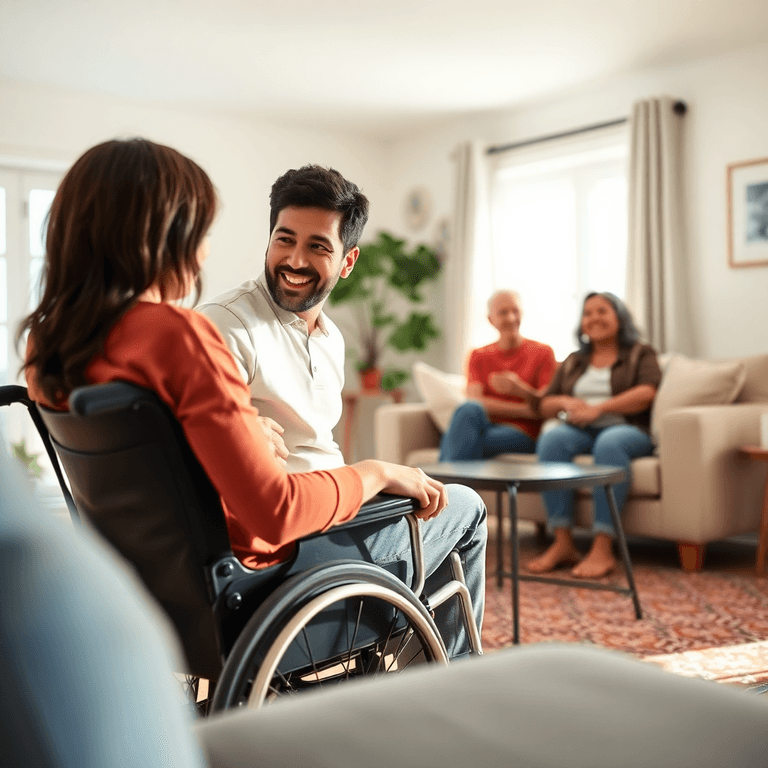
Life can be easier if you make it that way.
I do not mean “easy” as in effortless. I mean easier in the way that matters day to day: fewer barriers, fewer workarounds, less pain, less fatigue, less arguing over small things, more independence, and more calm.
Home accommodations are not about making your house look like a clinic. The best ones usually look boring, normal, and quietly life changing.
Below are 37 real, practical accommodations families use at home. Some cost nothing. Some are a weekend project. Some are bigger upgrades. Pick the ones that solve your friction points.
Quick note: Disability looks different in every family. These ideas can help with mobility, chronic pain, fatigue, sensory needs, low vision, hearing loss, neurodivergence, cognitive disability, and mental health. Use what fits and ignore the rest.

Start here: a simple way to choose accommodations
Before you buy anything, do this quick scan:
- Notice the “hot spots.” Where do you get stuck, tired, or unsafe? (Entry, bathroom, kitchen, stairs, bedtime.)
- Aim for one of three wins: reduce steps, reduce strain, or reduce decisions.
- Change the environment, not the person. A good accommodation makes the “right thing” the easy thing.
Now, the list.
1) A stable “landing zone” by the door
Put a sturdy chair or bench near the entry so someone can sit to take shoes off, manage braces, catch breath, or transfer safely.
Why it helps: fewer falls, less fatigue, smoother transitions.
2) Lever door handles (inside and outside)
Swap knobs for lever handles on the most-used doors.
Helps with: arthritis, limited grip strength, one-handed use, pushing a wheelchair.
3) A ramp that matches real life
A portable threshold ramp for a single step, or a longer modular ramp for porch stairs.
Tip: measure rise and run carefully. The “almost works” ramp becomes a daily hazard.
4) Widen the “path of travel” (not necessarily the doorway)
Sometimes you do not need construction. You just need to move the shoe rack, narrow console table, or plant stand that blocks turning radius.
5) Keyless entry or smart lock
A keypad lock helps when fine motor control is limited, when someone cannot easily hold keys, or when caregivers need access without exchanging keys.
6) A package drop zone
A simple bin or table near the door prevents bending, squatting, and repeated trips.
7) Better lighting right where you step
Motion-sensor bulbs or plug-in motion lights at the entry reduce falls and make low-vision navigation easier.

Living room and common areas (8–13)
Ensuring proper accessibility in the living room and common areas is important.
8) Clear “lanes” through the room
Create a straight, predictable route from door to couch to bathroom. If you use a mobility aid, think in turning circles, not straight lines.
9) Seating with the right height and arms
Chairs with firm cushions and armrests make sit-to-stand transfers safer.
Small change: furniture risers under a couch can make it easier to stand.
10) A dedicated rest spot
A recliner, daybed, or zero-gravity chair for chronic pain or fatigue, placed where family life happens so rest does not equal isolation.
11) Remote controls that are actually usable
Big-button universal remotes, voice control, or a phone-based controller can reduce frustration for low vision or dexterity issues.
12) Noise control that feels normal
Soft furnishings, thicker curtains, and rugs reduce echo and can help sensory overload, auditory processing issues, and hearing aid comfort.
13) Visual calm for sensory regulation
A “low-stimulation corner” with dimmable light, neutral colors, and a basket of sensory tools (weighted lap pad, fidget, noise-reducing headphones).
Kitchen accommodations that save energy (14–22)
The kitchen is where families burn the most energy without realizing it. The goal is not a “perfect” kitchen. It is fewer painful reaches and fewer extra steps.
14) Put the most-used items between shoulder and hip height
Daily plates, cups, meds, and snacks should live in the easiest zone.
Rule: if you use it every day, it should not require a stool, deep bend, or heavy lifting.
15) A rolling cart as a mobile counter
A rolling kitchen cart can hold appliances, prep items, or meals in transit.
Great for: limited carrying ability, tremor, fatigue, wheelchair users.
16) One-handed tools that actually work
Examples:
- electric can opener
- rocker knife
- jar opener mounted under a cabinet
- lightweight cordless vacuum for quick spills
17) Pull-out shelves and lazy Susans
Deep cabinets are “black holes.” Pull-outs bring items to you instead of forcing you to crawl in.
18) Anti-fatigue mat at the sink and stove
If standing is painful, a thick mat can be surprisingly helpful.
19) A tall chair or perch stool for cooking
Sitting while prepping and stirring is not “lazy.” It is smart pacing.
20) Side-by-side fridge organization
Use clear bins and labels so everyone can find things without digging. This reduces cognitive load and time on feet.
21) An induction cooktop (or portable induction burner)
Induction reduces burn risk because the surface stays cooler than traditional electric coils.
22) A “no-bend” trash and recycling setup
Use a pull-out bin, step-to-open can, or place bins higher to reduce repeated bending.

Bathroom: the highest-impact room (23–31)
If you can only upgrade one area, start here. Bathrooms combine water, hard surfaces, and urgent timing.
23) Grab bars that are anchored correctly
Not towel racks. Real grab bars secured into studs or with proper anchors.
Common locations: by toilet, inside shower, outside shower.
24) A raised toilet seat or comfort-height toilet
Standing up from a low toilet can be brutal on knees, hips, and backs.
25) A bidet attachment
This is a dignity upgrade and an independence upgrade, especially with limited reach, pain, or postpartum needs.
26) A shower chair or transfer bench
Sitting reduces fall risk and fatigue. A transfer bench helps when stepping over a tub edge is unsafe.

27) Handheld showerhead with a long hose
Makes seated bathing easier, helps caregivers, and supports sensory comfort.
28) Non-slip flooring or non-slip strips
A simple fix that prevents scary moments. Replace loose rugs with grippy mats.
29) A temperature-controlled faucet or anti-scald device
Helpful when sensation is reduced or reaction time is slower.
30) A nightlight that is not harsh
Motion-sensor nightlights reduce falls without blasting your eyes at 2 a.m.
31) Store toiletries at reachable height
A shower caddy placed too high becomes a daily shoulder injury.
Bedroom and sleep setup (32–37)
Sleep issues are common in disability, and bedrooms often need the most “invisible” accommodations.
32) Bed height that matches transfers
If the bed is too low, standing hurts. If it is too high, getting in is unsafe. Adjust with a lower frame, risers, or a mattress swap.
33) Bed rail or transfer pole (when appropriate)
A rail can help with rolling, sitting up, and safe transfers.
Important: choose a model designed to prevent entrapment and match the user’s needs.
34) Lighting you can control from bed
Smart bulbs, a clap switch, or a bedside lamp with a large button reduces late-night stumbling.
35) A “launch pad” for morning routines
Keep essentials in one spot: meds, water, brace, inhaler, compression socks, glasses, hearing aids, phone charger.
This reduces morning chaos and decision fatigue.
36) Blackout curtains or a sleep mask plus white noise
For sensory sensitivity, migraines, PTSD, or insomnia, controlling light and sound can be a real medical-level intervention.
37) A simplified clothing system
Open bins, labeled drawers, or a weekly outfit organizer reduces cognitive load and energy use.
Bonus: adaptive clothing (magnetic closures, elastic waistbands) can save hands and time.

A few accommodations families forget (but love later)
These are not part of the 37, but they are worth considering:
- Dimmable bulbs everywhere for migraines and sensory needs.
- Voice assistants for lights, timers, reminders, and calling for help.
- A “duplicate set” of essentials on each floor (meds, charger, water, wipes) to reduce stair trips.
- Visual schedules and labels for executive function support.
- A family agreement about clutter as an accessibility issue, not a personality issue.
How to implement this without getting overwhelmed
Pick one friction point and solve it this week.
A good “first accommodation” is usually:
- a grab bar
- a shower chair
- lever handles
- better lighting
- a chair by the door
- reorganizing one cabinet shelf
Small wins build momentum. And once the home supports you, everything else gets easier: parenting, partnerships, school mornings, workdays, and recovery.
Wrap up
Family life with disability gets lighter when the environment stops fighting you.
You do not need to renovate your whole house. You need a few smart changes that reduce strain, reduce steps, and reduce daily battles.
Start with the highest-impact room, choose one accommodation that solves a real problem, and let that be enough for now.