
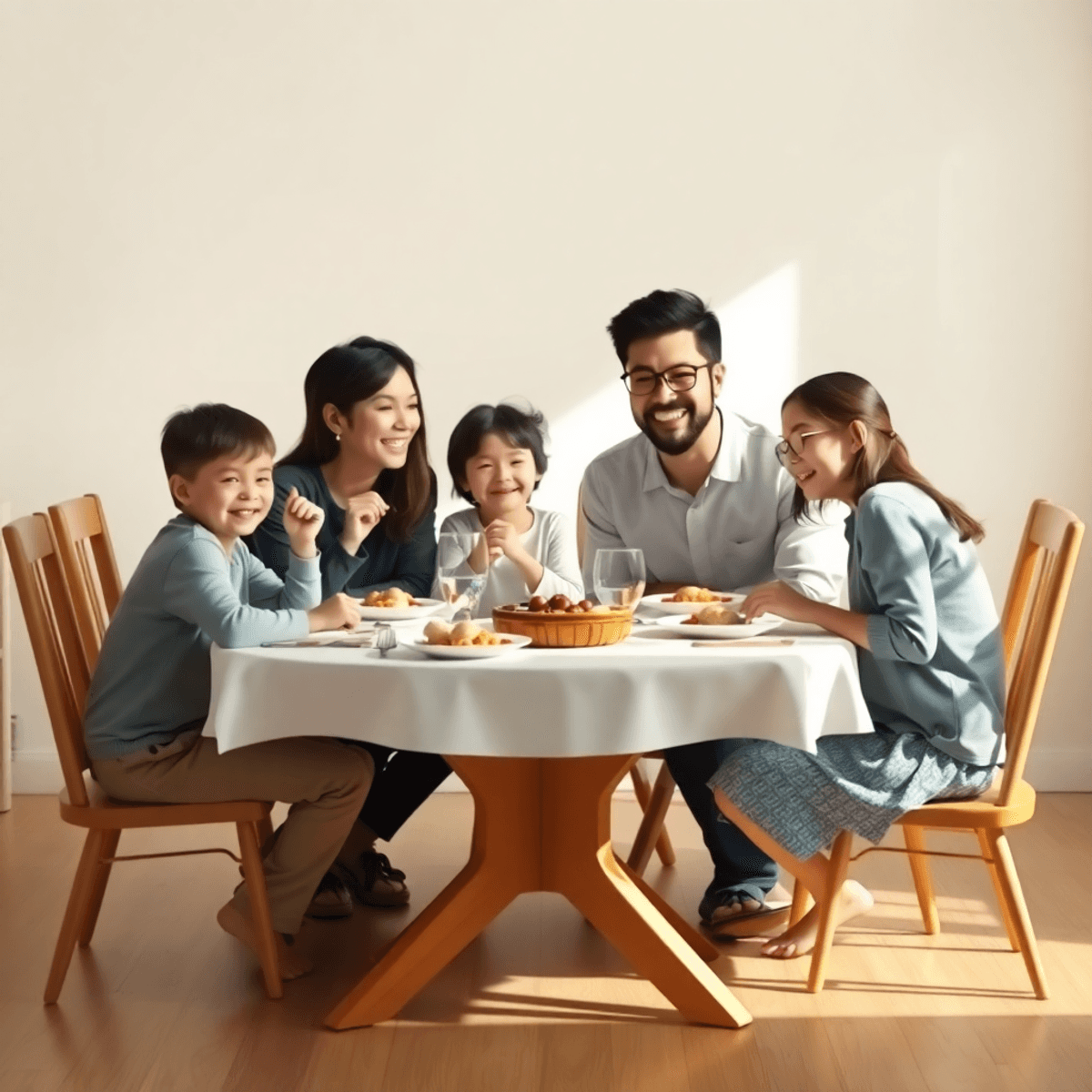
Why tiny habits work (and why families need them more than ever)
Most families do not need a big, dramatic reset. They need small, repeatable moments that stack up.
Tiny habits work because they are low effort and high consistency. When something takes two minutes instead of two hours, it is easier to repeat on tired days. And repetition is where the magic happens. Small actions reduce friction, build trust, and create emotional safety. Over time, your home starts to feel steadier. Not perfect, just steadier.
That matters right now. Many families face a significant number of everyday challenges. Big family overhauls can sound inspiring, but they often collapse under the weight of real life. Small daily wins are more realistic, more sustainable, and honestly more kind.
So that is the expectation here. These are practical happy family habits you can start today. No perfection. Just repetition.
As you read, you will notice a simple rhythm you can remember: Eat, Appreciate, Laugh, Talk, Serve, Play, Read, Work, Give, Rest. Think of it like a gentle family heartbeat you can return to, even when life feels loud.
10 Tiny Habits That Make Families Happier (Start Today)
A quick note before we start: every family is different. These habits can work for toddlers, teens, grandparents in the mix, single-parent homes, blended families, and families who are simply doing their best with what they have. Adapt what you need. Keep what helps.
Each habit includes: what to do, why it works, and one micro-step to start today.
1) Eat together once a day (even if it’s 10 minutes)
What it looks like: One shared meal or snack, any time that works. Breakfast counts. After-school snack counts. Even dessert counts. Keep it simple and put phones away.
Why it helps: Eating together creates a predictable touchpoint. It naturally improves communication because conversation happens without scheduling a “talk.” Many family-focused authors and researchers also point to family meals as a protective habit for kids, supporting mental health, self-esteem, and healthier choices over time.
Start today: Choose your easiest meal and make it a “default.”
Try: Tuesday breakfast together or a 10-minute snack at the counter after school.
Conversation starter:
- “How is it going today?”
- “Would you like to help make our food?”
2) Do a 2-minute “appreciation pass” every day
What it looks like: Each person shares one specific appreciation. Focus on effort, not personality traits.
Why it helps: Appreciation interrupts the criticism loop that can sneak in when everyone is busy. It builds gratitude and softens the way you see each other. Over time, it changes the emotional tone of the home.
Start today script:
“I noticed you ___, and it helped because ___.”
Examples:
- “I noticed you put your shoes away, and it helped because the entry feels calmer.”
- “I noticed you answered your sister kindly, and it helped because it kept things peaceful.”
Optional upgrade: Once a week, leave a short note in a lunchbox, on a pillow, or by the coffee maker.
3) Laugh on purpose (one tiny “joy trigger” nightly)
What it looks like: One small, reliable joy trigger in the evening. A silly recap. An inside joke. A five-minute karaoke moment. A short funny clip you watch together.
Why it helps: Laughing diffuses tension and bonds people quickly. It makes hard seasons feel lighter, even when nothing about the schedule changes. Many believe that laughter as a resilience habit, because joy helps the body and mind recover from stress.
Start today: Pick one “tiny joy” and repeat it for a week.
Try: “Funniest moment of the day” at dinner or bedtime.
Make it a tradition: Keep a “Joke of the Day” jar and let someone draw one each night.
4) Talk without fixing (the 5-minute check-in)
What it looks like: One person shares. The other listens and reflects. No advice unless requested.
Why it helps: This builds emotional safety, which is the foundation of healthy communication. When kids and spouses feel heard, misunderstandings shrink. Connection grows. You do not have to solve everything to be close.
Start today prompts:
- “What felt hard today?”
- “What felt good today?”
- “What do you need from me right now?”
- “Do you want help, or do you just want me to listen?”
Tip for teens: Talk side-by-side while driving, walking, folding laundry, or shooting hoops. Eye contact can feel intense. Side-by-side feels safer.
5) A small “love through actions” habit (one helpful act daily)
What it looks like: One small act of service each day: refill water bottles, pack a lunch, warm a towel, tidy a room, clear the sink, charge the family tablet, set out tomorrow’s clothes.
Why it helps: Love is a verb. Helpful actions reduce invisible labor, which is often carried quietly. When everyone contributes in small ways, resentment goes down and peace goes up.
Start today: Each person chooses one “tiny service” to do daily for one week.
Keep it small enough that no one groans.
Optional: Do a special dinner at home once a month. Not fancy. Just intentional.
6) Play together for 15 minutes (no phones, no pressure)
What it looks like: Fifteen minutes of play after dinner or before bedtime. Board games, a card game, bowling night, backyard basketball, a mini dance party, charades, or any activity your family enjoys doing together.
Why it helps: Play builds connection fast. It lowers stress and increases cooperation because it puts you back on the same team. Play also helps kids feel seen, and it helps adults remember they are more than schedules and responsibilities.
Start today: Set a timer for 15 minutes and rotate who chooses the activity.
If your family resists at first, start with five minutes. Leave them wanting more.
7) Read aloud together (yes, even with older kids)
What it looks like: Ten minutes of reading aloud, after dinner or before bed. One shared book. One reader, or take turns.
Why it helps: Reading aloud creates calm and closeness. It gives you shared stories and shared language. It also opens natural conversations about courage, kindness, choices, and consequences without turning into a lecture.
Make it fun: Choose something genuinely engaging.
- Younger kids: Where the Wild Things Are and other rich picture books
- Older kids and teens: a longer family read like The Lord of the Rings (or any adventure they can get into)
Start today: Put the book where you will see it. On the pillow. On the table. Visibility reduces friction.

8) Work on one tiny project together weekly
What it looks like: A 20-minute “family sprint” once a week. Garden for 20 minutes. Meal prep one ingredient. Tackle one garage corner. Set up holiday décor. Plan a simple weekend outing. Start a photo album.
Why it helps: Working together builds teamwork and shared pride. It teaches perseverance and competence. It also quietly communicates, “Our home is worth caring for, and we do it together.”
Start today: Choose one small, winnable task and set a timer for 20 minutes.
End with a quick celebration:
- “Look what we knocked out.”
- “That felt good.”
- “Teamwork win.”
9) Give together (time, attention, or resources)
What it looks like: Donate toys, write thank-you notes, help a neighbor, bring in trash bins for someone, make a support call to a relative, include grandparents in a weekly check-in, drop off cookies for a teacher.
Why it helps: Giving shifts the focus outward, which increases meaning and gratitude. It reminds kids and adults that they have something to offer. Families who give together often feel more connected because they share purpose.
Start today: Start a “giving box” in a closet. When it is full, donate it.
Or schedule one monthly family service moment.
10) Protect micro-rest and personal time (especially for moms)
What it looks like: Ten minutes of alone time per parent daily, plus 30 to 60 minutes weekly per person for real recharge. Quiet counts. A bath counts. Sitting outside with a warm drink counts.
Why it helps: Rest reduces irritability and increases patience. When you are depleted, everything feels louder and harder. When you are cared for, you repair faster, respond more gently, and have more joy to give.
Add-ons that help: a short walk, a few honest prayers throughout the day, self-compassion, and a nightly reflection on one good thing.
Start today: Create a simple tap-out phrase: “I’m taking 10.”
Then honor it. No guilt. No bargaining.
Make it stick: a simple 7-day family happiness plan
Do not start all ten at once. Start with two.
Week one pick:
- Choose one connection habit (Eat together, Appreciate, Play, Read, Talk).
- Choose one calm habit (Talk without fixing, Read aloud, Rest).
Use tiny cues:
- Put a book on the pillow.
- Set a dinner reminder.
- Keep a small gratitude notepad on the table.
- Put the “joke jar” where everyone can reach it.
Keep it flexible: Busy nights still count.
- A 10-minute meal counts.
- A 5-minute check-in counts.
- Reading one page counts.
Track lightly: A simple checklist on the fridge is enough. Celebrate consistency over intensity.
A realistic closing note (what “happier” actually looks like)
Happier families are not conflict-free. They repair faster and connect more often.
That is it. That is the goal. Not a perfect home, but a warmer one. A home where soft words, quick apologies, and small daily choices slowly shape the atmosphere.
If you want the easiest place to start today, pick one:
- Eat together for 10 minutes.
- Do a 2-minute appreciation pass.
- Have a 5-minute talk without fixing.
Daily life is built the way habits are built, one small choice at a time. And those small choices, repeated, can change the feel of your whole home.